Website speed is an important part of the WordPress experience. Slow pages can frustrate visitors, reduce conversions, and make a website harder to use on mobile devices.
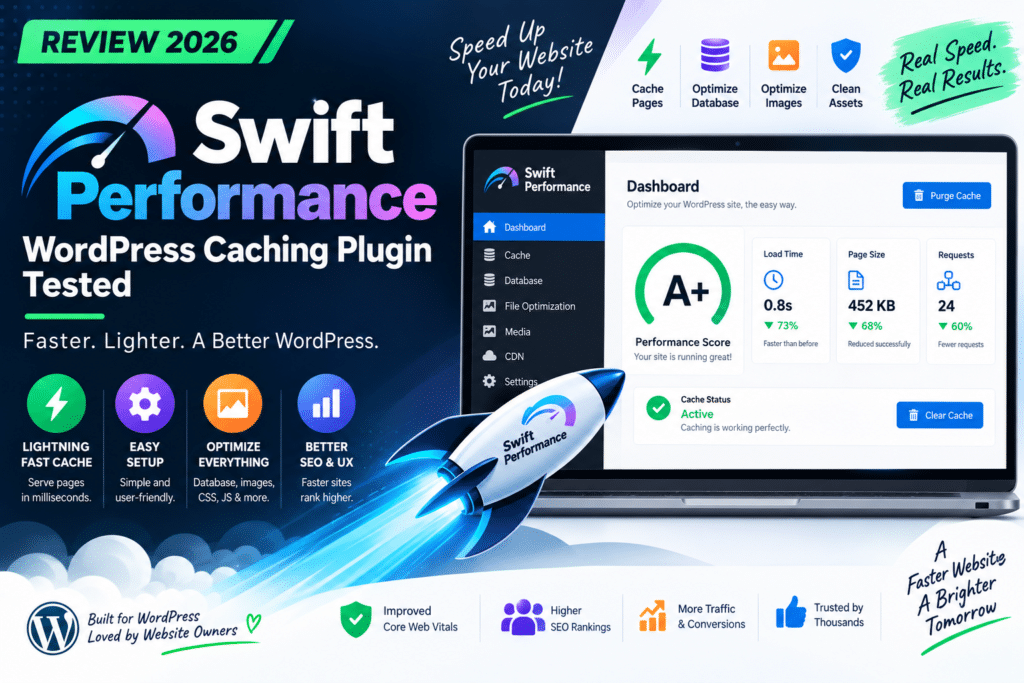
Swift Performance is a WordPress optimization plugin designed to improve loading speed through caching, asset optimization, and other performance tools. But with alternatives such as WP Rocket, LiteSpeed Cache, and FlyingPress, is it still worth considering in 2026?
This review explores its features, advantages, limitations, and ideal use cases. It is a feature-based assessment; no independent live-site benchmark was performed for this article.
Quick Verdict
Editorial Rating: 4.2/5
Swift Performance offers a broad set of optimization tools and can be useful for website owners who want detailed control over caching and frontend performance.
Its main drawback is that advanced optimization requires careful configuration. Beginners may prefer a simpler caching solution, while LiteSpeed-hosted websites should also consider their server’s native caching options.
What Is Swift Performance?
Swift Performance is a WordPress caching and optimization plugin that combines several speed-related features in one interface.
Depending on the edition and configuration, it provides tools for page caching, CSS and JavaScript optimization, image handling, database maintenance, and cache management.
The goal is to reduce unnecessary processing and improve how quickly website resources are delivered to visitors.
Key Features
1. Page Caching
Page caching stores generated HTML so WordPress does not need to rebuild the same page for every request.
This can reduce server processing and improve response times, particularly for content that does not change frequently.
Dynamic pages such as carts, checkout screens, and account areas require appropriate cache exclusions.
2. CSS and JavaScript Optimization
Swift Performance includes tools designed to reduce and optimize frontend assets.
These may include minification, combining compatible files, and adjusting how scripts and styles are loaded.
Advanced settings should be tested carefully because aggressive optimization can break menus, sliders, forms, or other interactive elements.
3. Image Optimization and Lazy Loading
Images are often among the largest resources on a WordPress page.
Swift Performance provides image-related optimization features, including lazy-loading capabilities and image optimization options depending on the edition and available services.
For best results, resize images before uploading and use suitable modern image formats.
4. Database Optimization
WordPress databases can accumulate unnecessary records over time.
Database maintenance tools can help clean items such as old revisions, expired transients, and other unnecessary data.
Always create a backup before running database cleanup, especially on WooCommerce or membership websites.
5. Cache Preloading
Cache preloading helps generate cached pages before visitors request them.
This can reduce the chance that the first visitor after a cache purge experiences a slower uncached page.
Preloading should be configured according to your hosting resources and website size.
6. Advanced Configuration
Swift Performance is attractive to users who want more control over their optimization settings.
However, more options also mean more opportunities for configuration conflicts. It is important to understand what each setting does rather than enabling every optimization automatically.
Swift Performance vs WP Rocket
| Feature | Swift Performance | WP Rocket |
|---|---|---|
| Main Focus | Detailed performance optimization | Streamlined premium caching |
| Page Caching | Yes | Yes |
| CSS/JS Optimization | Yes | Yes |
| Image-Related Tools | Available | Lazy loading and related tools |
| Database Optimization | Available | Yes |
| Ease of Use | More technical | Generally simpler |
| Best For | Users wanting granular controls | Users wanting an easier setup |
WP Rocket is often the more approachable option for beginners. Swift Performance may appeal to users who prefer detailed configuration and are comfortable testing optimization settings.
Swift Performance vs LiteSpeed Cache
LiteSpeed Cache is particularly effective on compatible LiteSpeed hosting because it can use server-level caching.
Swift Performance is a separate optimization solution and may be more relevant when your hosting environment does not provide LiteSpeed’s native caching advantages.
If your website runs on LiteSpeed or OpenLiteSpeed, compare the available server caching features before choosing another plugin.
Performance: What to Expect
Swift Performance can improve website speed when it addresses genuine bottlenecks, but results vary by website.
A site with no caching and unoptimized assets may benefit substantially. A website already using excellent hosting, server caching, and optimized images may see smaller improvements.
For a fair test, measure your website before and after configuration using PageSpeed Insights or WebPageTest. Compare mobile and desktop results, Core Web Vitals, page weight, and server response time.
Do not treat a perfect PageSpeed score as the only measure of success. Real user experience and stable functionality are more important.
Pros and Cons
Pros
- Broad optimization feature set
- Page caching
- CSS and JavaScript optimization
- Image-related optimization tools
- Database maintenance options
- Cache preloading
- Detailed configuration controls
Cons
- Advanced settings require learning
- Aggressive optimization can cause compatibility issues
- Not every feature is necessary for every website
- Premium features and licensing should be checked before purchase
- Performance gains depend on hosting and website configuration
Pricing and Value
Swift Performance has offered different editions and licensing options, so current pricing and included features should be verified directly before purchasing.
When comparing plans, check the number of supported websites, renewal terms, updates, support, and whether advanced optimization features are included.
The plugin is most valuable when its tools solve performance problems that your hosting or existing optimization stack does not already address.
Who Should Use Swift Performance?
Swift Performance may be a good fit for:
- WordPress developers
- Agencies managing client websites
- Users comfortable with advanced caching settings
- Content-heavy websites
- Website owners wanting detailed optimization controls
It may be less suitable for beginners who prefer a simple, mostly automatic caching setup.
Important Configuration Tips
Before enabling advanced optimization, create a backup and test changes on a staging website when possible.
Avoid running multiple full caching plugins at the same time. Configure exclusions for dynamic WooCommerce and membership pages, and test forms, menus, checkout, and login functionality after changing JavaScript settings.
Enable features gradually so you can identify which setting causes a problem if something stops working.
Final Verdict
Overall Rating: 4.2/5
Swift Performance remains a capable WordPress optimization option for users who want a broad set of performance tools and are comfortable configuring them.
For beginners, WP Rocket may offer a simpler experience. For compatible LiteSpeed hosting, LiteSpeed Cache deserves consideration because of its server-level caching capabilities.
The best choice is the plugin that works reliably with your hosting, theme, and website requirements—not necessarily the one with the longest feature list.
Frequently Asked Questions
What is Swift Performance?
Swift Performance is a WordPress caching and optimization plugin designed to improve website loading speed through caching and frontend performance tools.
Is Swift Performance better than WP Rocket?
Neither is universally better. Swift Performance offers detailed controls, while WP Rocket is often preferred for its streamlined setup.
Does Swift Performance work with WooCommerce?
It can be used with WooCommerce, but dynamic pages such as cart, checkout, and account screens must be handled carefully.
Can Swift Performance improve Core Web Vitals?
It may help improve certain performance metrics, but results depend on hosting, theme quality, images, scripts, and configuration.
Should I use Swift Performance with another caching plugin?
Generally, avoid running multiple full caching plugins simultaneously because overlapping features can cause conflicts.
Is Swift Performance worth buying?
It can be worthwhile for users who need its advanced optimization features. Compare current pricing, support, and compatibility before purchasing.